

You Think You Need Accountability
"Accountability" is often the wrong fix

There’s a sentence I hear often, usually said with a mix of frustration and self-criticism:
“I just need better accountability.”
On the surface, “accountability” sounds reasonable. Responsible. Adult.
Like the missing ingredient between knowing what to do and actually doing it.
But when we slow the moment down, something else is usually happening.
Slowing the Moment Down
Picture the scene.
You’re staring at a task you genuinely care about. It’s not meaningless. It’s not beneath you.
It’s just… quiet.
No deadline breathing down your neck.
No one asking for an update.
No meeting forcing you to explain what you’ve been thinking.
Just you, the task, and a vague sense that you should be able to start.
This is usually where the inner commentary begins.
“If I were more disciplined, this wouldn’t be a problem.”
“Other people don’t need someone watching them.”
“Why can’t I just be independent?”
So the conclusion forms quickly:
What’s missing is accountability. Pressure. Consequences.
Something external to make this feel real.
Where Self-Judgment Sneaks In
Here’s the subtle shift that’s easy to miss.
The moment execution stalls, the explanation doesn’t land on the task.
It lands on you.
Needing accountability quietly becomes evidence of a flaw. You are incompetent and you lack discipline.
And once it’s framed that way, the problem is no longer:
“How does my mind engage with work?”
It becomes:
“What’s wrong with me that I need a babysitter?”
So you try to manufacture accountability. Tighter plans, stronger promises, more internal pressure.
But when that still doesn’t work, the judgment just sharpens.
What’s Actually Missing
In many real conversations I’ve been part of, the shift doesn’t come from stricter accountability at all.
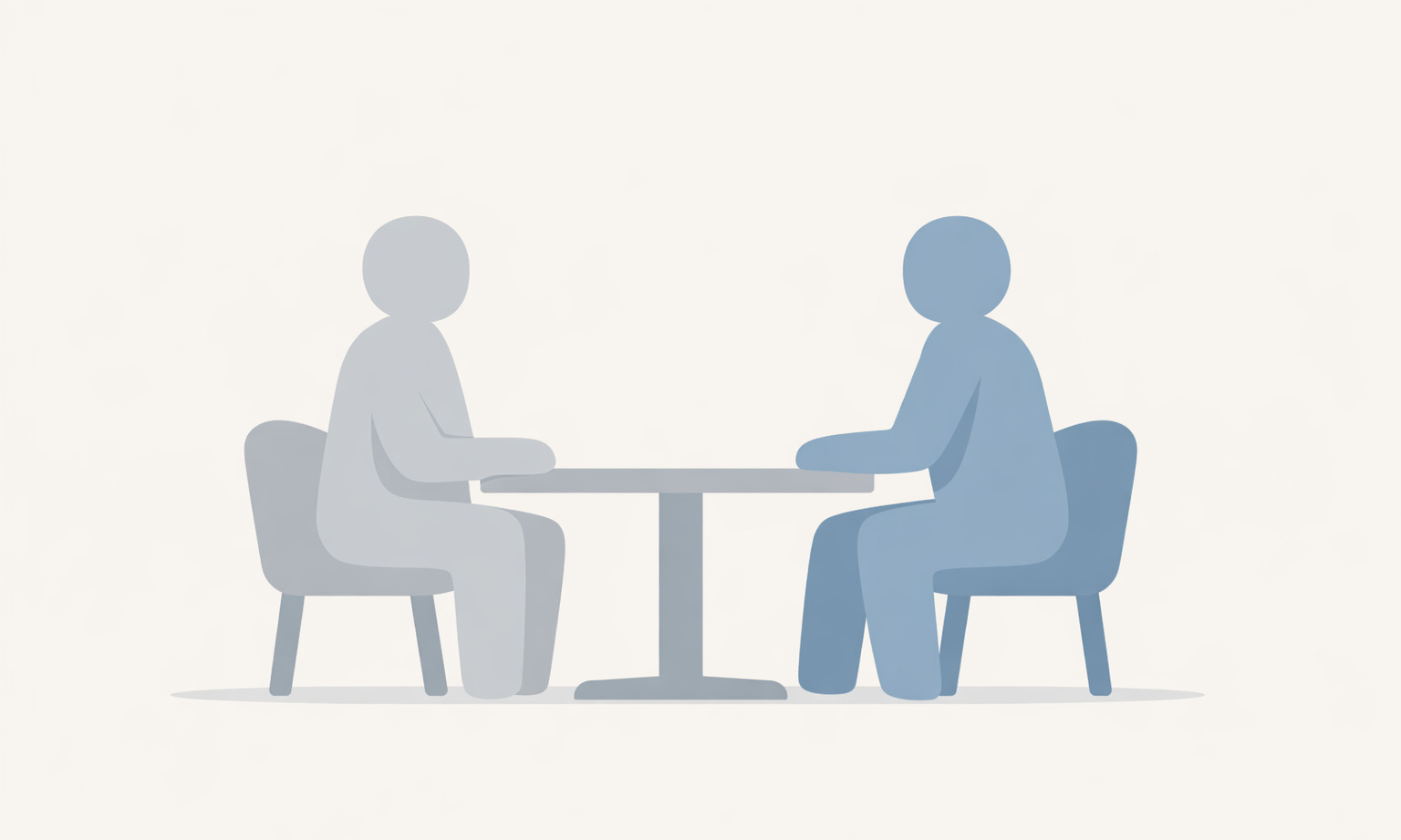
It comes from another human entering the room.
Not to monitor.
Not to evaluate or enforce consequences.
Just to be there.
Something changes the moment thoughts are spoken out loud. When half-formed ideas have somewhere to land. When the task is no longer held entirely inside one person’s head, or in a poorly written ticket.
Often, the person will say something like: “I didn’t realize that was the part I was stuck on until I said it.”
Nothing magical happened. No discipline suddenly appeared. No motivation hack kicked in.
What changed was the cognitive load and the isolation.
The work became socially real.
This isn’t about accountability.
It’s about how some minds regulate attention, clarity, and momentum.
For the ADHD brain, thinking is not a silent, internal act. It’s relational. It stabilizes when shared, and it feels good to be with others.
That doesn’t mean you can’t work alone. It means working alone often costs more than you realize.
“Accountability” Is Often a Misdiagnosis
Imagine two very different check-ins with your manager.
In the first, your manager asynchronously sends you a list of tasks each Monday and asks you for a report each Friday on what you finished.
Clear tasks, clear expectations, and clear deliverables.
In the second scenario, each Monday the manager has a 45‑minute phone call.
“Hey — what are you working on lately?”
No strict agenda.
No checklist.
Just an informal conversation.
That first sounds like real accountability. Just what you need, right?
But which do you think would actually be more helpful for your productivity?
Be honest…
Not the task list. The conversation.
Not because the tasks wouldn’t help. But because the informal meeting would force something else to happen first.
You have to talk. Ask questions. Sort your thoughts out in real time.
The work doesn’t become clearer because someone assigned it. It becomes clearer because it was spoken.
That moment matters.
Because on paper, the task list looks like accountability and the conversation looks like fluff. But for some minds, it’s the conversation that does the real work.
Naming the Cost
When this gets mislabeled as an accountability problem, the cost compounds quietly.
You don’t just feel stuck. You start to distrust yourself.
You stop asking for the kind of support that would actually help, because you believe needing it means something about your worth.
So you wait for urgency instead.
Deadlines, consequences and crisis do often create focus — but at a price. Over time, the pattern teaches a harsh lesson: “I only function under pressure.”
But the moment was never asking for discipline. It was asking for connection.
A Different Way to See the Moment
If you zoom out just slightly, this reframes the whole experience.
Needing another person nearby doesn’t mean you’re irresponsible. It means your mind clarifies in relationship.
Wanting to talk something through before acting isn’t childish or needy. It’s how ambiguity dissolves.
Struggling alone doesn’t make you strong. It often just makes things heavier than they need to be.
Not everything that looks like a discipline problem is one.
Sometimes, it’s just a human one.