

How staying silent backfires
“Let me think about it first. I’ll ask for help later.” For ADHD, that order is exactly backward.

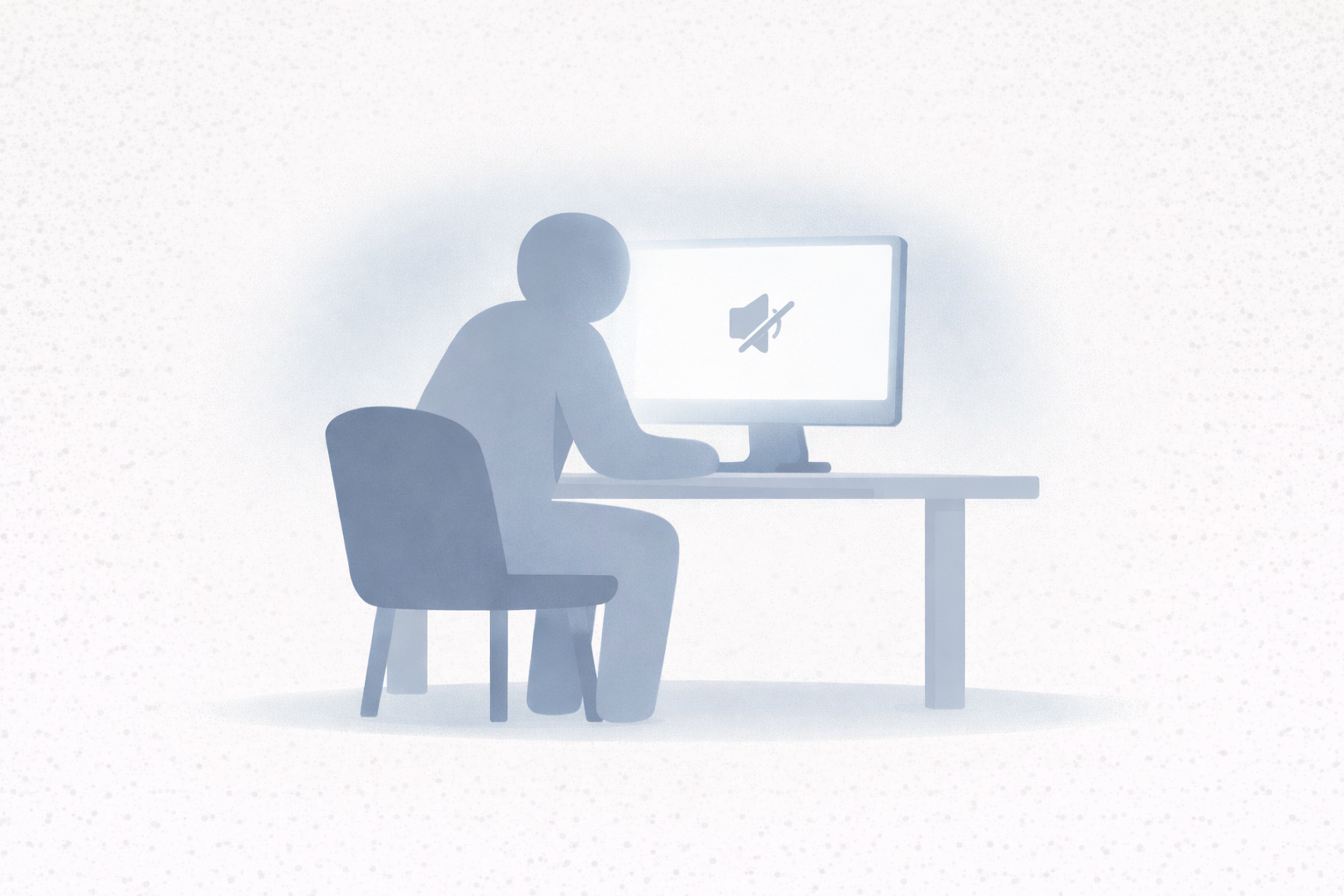
“I’ll just figure it out.”
It sounds confident.
Sometimes it even feels responsible.
You say it after a meeting where something didn’t fully make sense. Or while reviewing a ticket that feels half-specified — one key detail missing, one edge case undefined.
No one else asked a question.
Everyone seemed fine.
So you decide you’ll handle it.
You’ll just figure it out.
And the next thought follows almost immediately:
“I just need to think about it more.”
That sounds mature. Measured. Professional.
You don’t want to ask something half-formed. You don’t want to slow the room down. You don’t want to expose confusion that “shouldn’t” be there at your level.
So you tell yourself you’ll think first.
Then speak.
When Ambiguity Meets ADHD
But here’s what’s actually happening.
Something was ambiguous.
With ADHD, ambiguity doesn’t sit quietly. It overwhelms.
ADHD is defined by limits in working memory and regulation. When the problem is concrete, that system works well. When things are unclear, your mind doesn’t settle. It just spins.
Working memory now has to hold context, assumptions, constraints, and open questions all at once. Without structure, nothing anchors. The problem doesn’t lock in.
Instead of clarity, you feel strain.
But you try to resolve it internally.
Because nobody else seemed bothered.
And why should you need more than others?
So you replay the meeting. You reread the ticket. You simulate outcomes. You try to narrow it down on your own.
But without conversation, the space doesn’t narrow.
It just stays open.
And “thinking about it” isn’t a concrete task. There’s no clear first move. No output. No signal that you’re getting closer.
So the strain lingers.
Sometimes you’ll even tell yourself:
“I’ll talk to someone once I’ve thought about it more — so I have something tangible to discuss.”
That sounds responsible. But it’s actually backward.
You’re waiting for clarity that won’t arrive on its own.
Because ADHD thinking stabilizes through externalization.
Clarity doesn’t form privately and then get expressed.
It forms when ambiguity is spoken through.
Private Weight
So you pivot.
You switch to something smaller. Something defined. Something that gives you traction.
You aren’t consciously avoiding the work.
You tell yourself you’ll come back once you’ve “really thought about it.”
But you don’t.
A day passes. Then another.
And now you’re behind.
The task that once felt unclear now feels threatening.
Why am I not making progress? This shouldn’t be this hard.
The ambiguity hasn’t resolved. It has multiplied.
When Consequences Appear
The delay becomes visible.
Someone asks for an update.
You rush and implement based on a guess.
Tests fail.
A reviewer points out a misunderstanding.
Now there are consequences.
And those consequences feel like confirmation.
See? I’m not competent. I’m not operating at the level I should be. I’m falling behind.
But that wasn’t the starting point.
The starting point was ambiguity interacting with ADHD — kept private.
When Load Turns Into Identity
By the time judgment shows up, the earlier steps are invisible.
Your brain compresses the chain. It jumps from consequence straight to identity.
“I should have known.”
“I’m not as sharp as I thought.”
The beginning disappears.
It didn’t start with incompetence.
It started with ambiguity being held privately in a brain that doesn’t stabilize ambiguity alone.
What Changes When It’s Spoken
When something unclear is said out loud, it gets narrowed. Structured. Reflected back. The cognitive load drops.
If you wait to speak until you’ve already clarified it alone, you may wait indefinitely.
From the outside, staying silent looks like independence.
Internally, it’s a brain trying to carry more than it’s built to hold.
Nothing dramatic happened.
Just a small question that never made it into the room.
And everything that followed.
The pattern is visible now. That changes what’s possible.
🤣 I'm dead rn. The Responsible™ and Mature© man portrayal is gold. We are told to solve our problems this EXACT way, by facing it on and allegedly getting a huge Confidence Boost® from facing it alone. This couldn't be farther from the truth. It will send you tumbling down to the deepest pits if you go that route.